Miami Sandbar Guide · June 2026 · 11 min read
Miami Sandbar Trips: Nixon Sandbar, Stiltsville & Biscayne Bay
A Miami sandbar trip puts you in waist-deep water on a sand flat inside Biscayne Bay — not a beach you walk to. You need a boat, usually a private charter from the Rickenbacker Causeway, with a licensed captain who knows where Nixon Sandbar sits off Key Biscayne when tide and east wind cooperate.
Editorial disclosure: Miami Tours and Water Adventures operates private sandbar and snorkel charters from Rickenbacker Marina. This guide explains how Miami sandbar trips work for any visitor — we reference our own trips only where the category fits.

Quick Answer
What Is a Miami Sandbar Trip?
A Miami sandbar trip is a boat outing to shallow sand flats inside Biscayne Bay where the captain anchors in waist-deep water so guests can swim, float, and relax with the skyline behind them. The best-known zone is Nixon Sandbar on the bay side of Key Biscayne — open water over a sand bottom, not a county beach you reach on foot. Most visitors book a private charter for two to four hours from Rickenbacker Causeway marinas.
Morning beats summer afternoons — storms build after 2 PM. Weekdays are quieter than Saturday rafts. Longer routes may add a Stiltsville photo pass or a Virginia Key snorkel leg. Check the captain’s Coast Guard credential, tide window, and written weather policy before you pay.
- Typical duration 2–4 hours private · 3–6 hours with snorkel add-on
- Main sandbar zones Nixon Sandbar (Key Biscayne) · shallows near Virginia Key · occasional Haulover flats on longer routes
- Best departure window Weekday mornings 9–11 AM · avoid summer afternoons after 2 PM when storms build
- How most visitors book Private captain-led charter from Rickenbacker Marina — not a public ferry or beach walk-on
Basics
What Is a Miami Sandbar Trip?
A Miami sandbar trip anchors a boat on a shallow sand flat inside Biscayne Bay so guests can stand, swim, and float in waist-deep water — usually for sixty to ninety minutes within a longer private charter, with the Miami skyline and Key Biscayne shoreline as the backdrop.
Unlike a beach day at a county park, a sandbar visit happens in open bay water. No lifeguard towers. No marked swim lanes. The captain picks an anchorage where depth stays predictable for your group, wind is manageable, and other vessels have room to swing on their lines. That judgment call is why local captains matter — the same GPS pin can read three feet at low tide and six feet three hours later.
Biscayne Bay sits inside Florida’s Biscayne Bay Aquatic Preserve, managed by the Florida Department of Environmental Protection. Shallow flats east of Virginia Key and Key Biscayne are the usual sandbar zones for Miami departures. Water temperature runs roughly 72–75°F in winter and 84–87°F in summer — comfortable for long floats when the sun is up.
A standard sandbar day often follows a pattern: a short sightseeing leg past Star Island or Stiltsville, then the anchor set, then optional snorkel or sunset routing on the way back. For how sandbar trips fit among other bay experiences, see our broader snorkel and sandbar section in the Miami boat tours guide.
“Guests picture a party scene every Saturday. Some days it is busy. Other weekdays you have wide shallow water almost to yourself. I always check tide and east wind before I commit to Nixon — if the bay is choppy, we adjust the route or the anchor zone.”
— Felipe Arango, Founder · private charters on Biscayne Bay since 2014
Sandbar trips are not high-speed sightseeing. Guests who expect a continuous city loop sometimes feel the anchor segment is slow. That is the point. Waist-deep water, skyline photos, time off the dock — without fighting beach parking on Miami-Dade county beaches. Want adrenaline first? Book guided watersports another day and come back for the flats.
Below: where captains anchor, how private charters compare with other formats, timing by season and day of week, and the rules that keep bay days safe for wildlife and guests alike.
Locations
Where Miami Sandbars Are — Nixon, Key Biscayne & Stiltsville
Nixon Sandbar is the name most captains use for the shallow flats on the bay side of Key Biscayne, southeast of the Rickenbacker Causeway — roughly twenty to forty minutes by boat from causeway marinas depending on vessel speed and channel traffic.
It is informal geography, not a signed park entrance. On busy weekends dozens of boats raft together over the same sand bottom; on a Tuesday morning the same coordinates can feel spacious. Adjacent zones near Virginia Key offer similar depths with quicker access to reef snorkel routes documented by Biscayne National Park and shoreline context from Virginia Key Beach Park.
Stiltsville — the photo pass
Stiltsville is a cluster of historic houses on pilings in the central bay, south of Key Biscayne. Private charters often run a slow pass for photos before or after the sandbar anchor. The Stiltsville Trust manages the structures; landing and event access are restricted and require permission. Swimming up to the houses is not a casual guest activity — treat Stiltsville as a channel sightline, not a swim stop, unless your operator has explicit authorization.
Other shallow zones captains use
- Key Biscayne bay side Nixon and nearby flats — default sandbar anchor for Rickenbacker departures. County context on coastal parks: Miami-Dade Parks.
- Virginia Key shallows Closer to reef patches; common on combo snorkel-and-sandbar charters. Tourism overview: MiamiandBeaches.com water sports.
- Haulover / northern bay (longer routes) Some half-day charters on calmer days push north for variety — less common than Nixon for a standard three-hour block.
Virginia Key is where many visitors first see Miami from the shoreline — a county beach park with lifeguards and marked swim areas. That is different from a sandbar anchor in open bay water: the beach is walk-on access; Nixon and the flats require a boat. Charters that combine both often snorkel near the reef and anchor on the shallows on the return leg.

Channel markers and shoal lines shift after storms. Captains who run these routes weekly read the water color and wind fetch — not just a screenshot from last summer. First-time guests often ask whether Nixon is “the same” as the Haulover sandbar north of the city. They are different flats with different crowd cultures; Nixon is the default for Rickenbacker departures because travel time and shelter favor Key Biscayne on typical southeast wind days.
Tides change depth faster than maps suggest. Check NOAA tide predictions for Virginia Key or Key Biscayne stations when you plan your date. Marine forecasts from weather.gov/mfl help you judge morning versus afternoon departures.
Formats
Private Sandbar Charters vs Public Options
There is no public ferry or walk-on access to Nixon Sandbar — you reach the flats by private boat with a licensed captain, your own properly credentialed vessel, or a dedicated small-group sandbar tour that includes the anchor stop in the itinerary.
Shared sightseeing cruises from Bayside and downtown Miami focus on skyline loops. They are priced per ticket and run fixed schedules. Most do not budget sixty to ninety minutes anchored in waist-deep water. If sandbar time is the goal, compare private day charters and sandbar-specific adventures rather than large sightseeing vessels listed on MiamiandBeaches.com boat tours.
| Format | Sandbar time | Typical price logic | Tradeoff |
|---|---|---|---|
| Shared sightseeing cruise | Rare or none | $25–$45/person | Fixed route, strangers on board |
| Private day charter | 60–90+ min anchor typical | Flat group rate or per-person with minimum | Higher total than shared ticket |
| Dedicated sandbar adventure | Core of the trip | Often priced per person on smaller boats | Less routing flexibility than full private charter |
| Luxury yacht charter | One stop among several | $800–$5,000+ flat per booking | Minimum hours; larger groups |
Private charters win when you want playlist control, kids’ pace, and a guaranteed anchor. Dedicated sandbar adventures fit smaller groups who want the category without booking an entire yacht. Either way, confirm that fuel, captain, and safety gear are included — and verify licensing per our captain verification guide.
Price bands reflect 2026 Miami market ranges; your checkout quote is the number that matters. Holiday weekends compress availability across the bay.
Timing
Best Time for a Miami Sandbar Trip
Season, day of week, time of day, and tide all change a sandbar day more than the brochure photo suggests — morning weekday departures in spring and early summer usually deliver the calmest water and the least crowded anchorages.
- Winter (December–February) Dry air and comfortable boating weather; water 72–75°F. Weekends fill fast — book ahead. See seasonal detail in our best time of year guide.
- Spring (March–May) Strongest all-around window: warm water, light wind, good snorkel visibility if you combo reef and sandbar. Spring break weeks add crowd density on Saturdays.
- Summer (June–August) Warmest water for long floats. Afternoon thunderstorms form on most days after 2 PM per NOAA’s Miami forecast office — morning anchors are the safer bet.
- Fall (September–November) Shoulder season clarity when hurricanes stay away. Flexibility on dates matters during peak storm weeks.
Day of week — what to expect on the sandbar
| Day | Crowd level | Best slot | Notes |
|---|---|---|---|
| Monday–Thursday | Low to moderate | 9–11 AM departure | Easiest anchorage spacing; calmest for families |
| Friday | Moderate | Morning or late afternoon | Local boats increase by evening |
| Saturday | High | Early morning only | Rafted boats, music, busy channel — arrive early |
| Sunday | Moderate to high | Morning | Slightly lighter than Saturday peak by afternoon |
What we tell guests before they board: if Saturday is your only free day, book the first slot out of the marina. The crowd shows up around eleven. Holiday Mondays and July Fourth weekends pack the bay with local boat owners who know the flats by heart. Music from nearby vessels, rafted boats, busy channel traffic until early afternoon — that is part of the deal.
Pair the table above with tide data: many captains prefer a falling or low tide window when the flat is shallow enough to stand comfortably. Ask your operator how tide affects the planned anchor on your date. For broader seasonal context beyond sandbars, the Miami boat tours guide covers winter crowds, summer storms, and fall hurricane flexibility in depth.
Experience
What a Sandbar Day Looks Like on the Water
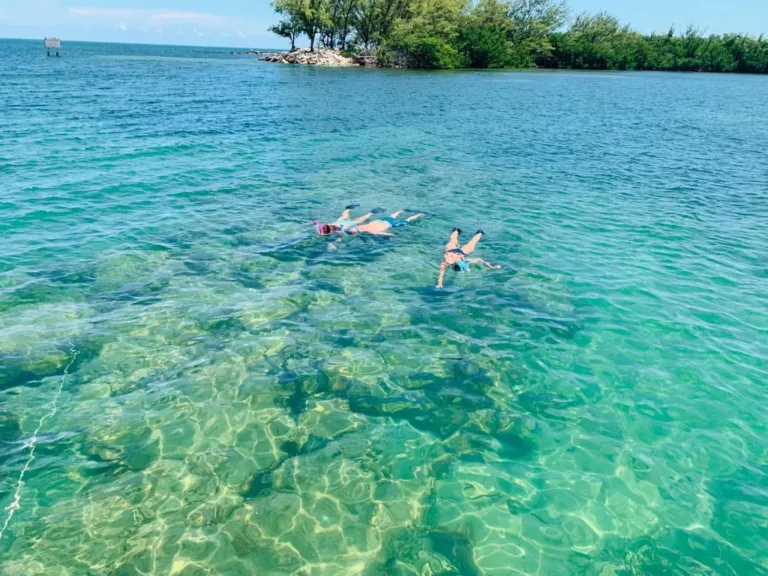
Three hours sounds long until you are floating with the skyline behind you. A typical private sandbar charter from Rickenbacker Marina runs twenty minutes through the channel, sixty to ninety minutes on the flats, then the ride home — maybe past Stiltsville or Star Island if the light is right.
Before the anchor drops, the captain briefs guests on life jackets, swim zones, and propeller safety. Kids and weaker swimmers stay inside the captain’s arc. Floating mats, noodles, music — normal on private boats. Glass bottles? Most operators say no. East wind above fifteen knots and the anchor gets choppy; your captain may slide to a sheltered bight near Virginia Key instead.
Snorkel crossover — reef then sandbar
Half-day combos are popular: a Virginia Key reef snorkel (roughly six feet over limestone boulders) followed by the sandbar anchor on the way back. Visibility varies with wind and rain; spring mornings often deliver fifteen to twenty-five feet in protected bay water. Wildlife is never guaranteed — bottlenose dolphins use the channels year-round, and seasonal manatee sightings require slow speeds in designated zones per FWC manatee protection rules.
For dedicated reef routing without the party atmosphere of a busy Saturday sandbar, compare our private snorkel charter and the water adventures hub. Sunset returns swap midday crowds for softer light — see private sunset cruises if timing matters more than peak sandbar social hours.
Expect a realistic rhythm: twenty to thirty minutes of sightseeing, sixty to ninety minutes at anchor, then the run home. Longer four- to six-hour bookings add a second snorkel leg or a slower Stiltsville pass with time for photos. Guests celebrating birthdays sometimes bring cupcakes and decorations — confirm what is allowed on your vessel before you pack candles or confetti that blows into the bay.
Dolphins, rays, and small reef fish appear often enough that guests expect them — but ethical operators never chase wildlife. Keep distance, avoid feeding, and follow captain instructions when manatees are nearby. Habitat context for the wider bay ecosystem is documented by Biscayne National Park south of the usual Nixon routes.
YMYL Safety
Rules, Safety & Bay Stewardship
Commercial sandbar trips require a U.S. Coast Guard-licensed captain, compliant safety gear, and adherence to Florida boating regulations — including manatee slow zones, no-wake areas, and alcohol rules for operators and guests.
Federal credential standards are published by the U.S. Coast Guard National Maritime Center. State equipment, livery, and navigation rules are on the FWC boating regulations page. Boater safety education requirements for many drivers are summarized on FWC boating safety.
- Anchor responsibly Avoid seagrass when possible; captains should set hook in sand. Bay health programs under Florida DEP monitor water quality — guests can help by using reef-safe sunscreen and packing out trash.
- Manatee & wildlife zones Slow-speed zones are enforced. Never chase, touch, or feed marine mammals. Report injured wildlife through FWC channels.
- Weather authority Lightning ends the swim segment. Reputable operators cancel or reschedule before departure when conditions are unsafe — compare written policies before you pay.
- Alcohol & glass Many charters allow moderate alcohol for guests of legal age; glass containers are widely banned on board. The captain remains sober — that is non-negotiable on passenger vessels.
Swimming near multiple boats means propeller awareness. Stay in the captain’s swim box, wear a life jacket if asked, and assign an adult to watch children at all times. USCG-rated life jackets should be aboard for every passenger.
Weather forecasts and marine statements for Biscayne Bay: weather.gov/mfl. Our cancellation terms: terms and billing policies.
Packing
What to Bring on a Miami Sandbar Trip
Pack for sun, salt, and a wet anchor exit — reputable private charters supply captain, fuel, life jackets, and often ice and water, but guests bring personal swim gear, ID, and reef-safe protection.
| Item | Who brings it | Why it matters |
|---|---|---|
| Swimwear & towel | Guest | Core sandbar gear; quick-dry towels save deck space |
| Reef-safe sunscreen | Guest | Bay reflection amplifies UV; protects seagrass ecosystems |
| Hat, sunglasses, rash guard | Guest | Long midday exposure on open water |
| Water shoes (optional) | Guest | Shell fragments and occasional sharp rubble on the flat |
| Photo ID & booking card | Guest | Check-in at marina; age verification for alcohol if allowed |
| Life jackets | Operator | USCG-rated PFDs for all ages — confirm child sizes when booking |
| Snorkel gear (if combo) | Operator or guest | Many reef combos include masks and fins — ask in confirmation |
| Snacks & drinks (no glass) | Guest | Cooler space varies by boat; ice often provided on private charters |
Full check-in requirements live in the FAQ and your booking email. Arrive thirty minutes early at the marina with the card used at purchase.
Advisor
How to Choose a Sandbar Operator
Compare operators on credential, sandbar minutes in writing, departure marina, total price, and weather cancellation language — not on who posted the loudest Saturday raft-up clip.
Red flags are simple. No credential offered. Vague anchor time. Cash-only with no contract. A captain who cannot explain weather refunds in plain English. Good operators answer those questions before you board.
-
Verify the captain
Ask for merchant mariner credential status before boarding. Use the USCG NMC reference and our verify a captain section.
-
Confirm sandbar minutes
Some “bay tours” only slow-roll past the flats. Get anchor time in the listing or contract — sixty to ninety minutes is typical on a three-hour private charter.
-
Read reviews for weather handling
Look for patterns on reschedule fairness, not just photo quality. Our guest feedback: reviews.
-
Match boat to group size
Overloading a small center console changes stability and comfort at anchor. Yachts fit larger celebrations; day boats fit families — see private boat tours and yacht charters.
-
Ask about combo routing
Snorkel-and-sandbar combos need enough hours — four hours is a practical minimum for both legs without rushing.
Questions before booking: contact us or call +1 305-772-9942. Company background: about our team.
If this guide fits your plans
Our Sandbar Adventure from Rickenbacker Marina
We run a dedicated sandbar adventure in Miami with a USCG-licensed captain, fuel, and safety gear — private to your group, with Nixon Sandbar or an alternate flat chosen for conditions that day. Optional snorkel add-ons cover Virginia Key on longer blocks.
Departures: Rickenbacker Marina, 3301 Rickenbacker Causeway, Miami, FL 33149. Dock details arrive by email after booking. Check live availability via online booking or contact.
Common Questions
Frequently Asked Questions
Where is Nixon Sandbar in Miami?
Nixon Sandbar sits in Biscayne Bay off the north end of Key Biscayne, inside the sheltered bay side rather than on the Atlantic surf beach. It is reachable only by private boat — there is no public ferry or walk-up access. Most charters approach from Rickenbacker Causeway marinas and anchor where tide and east wind leave predictable shallow sand flats.
Can you walk to Nixon Sandbar without a boat?
No. Nixon Sandbar is submerged sand and seagrass flats in open bay water — not a shoreline you can reach on foot from Key Biscayne parks. Bill Baggs Cape Florida State Park and Virginia Key offer beach access, but the waist-deep sandbar experience requires a boat with a licensed captain who knows anchoring zones and channel traffic on Biscayne Bay.
What is the best day of the week for a Miami sandbar trip?
Weekdays (Tuesday through Thursday) usually mean fewer anchored boats and less weekend-style crowding on Nixon Sandbar. Saturdays from late morning through mid-afternoon are the busiest window — expect music from other vessels and less room to spread out. For summer afternoon storms, book a morning departure regardless of day of week and check the National Weather Service Miami forecast before you leave the dock.
How deep is the water at Miami sandbars?
At high tide on calm days, many Biscayne Bay sandbar stops run waist-deep (roughly three to five feet) over packed sand and seagrass patches. Depth drops quickly toward channel edges — stay near the captain’s anchor zone. Low tide can expose more bottom and make swimming shallower; east wind pushes water off the flats and can shorten the comfortable window.
Can you visit Stiltsville on a sandbar charter?
Stiltsville’s historic houses sit in Biscayne Bay south of downtown — captains may pass nearby for photos on some routes, but the structures are managed by the Stiltsville Trust with strict access rules; climbing or partying on the houses is not allowed. A sandbar day is anchored swimming time on the flats, not a Stiltsville admission tour. Confirm routing with your operator before you book if landmark views are a priority.
What happens if weather cancels my sandbar trip?
Reputable operators make the weather call before departure — guests do not decide at the dock. If the captain cancels before launch, you should receive a full reschedule or refund per written terms. Miami Tours and Water Adventures issues a full reschedule or refund when the captain cancels before departure; full terms are on our terms, billing, and cancellation policies page.
Ready to Book
Planning a Sandbar Day on Biscayne Bay?
Check availability for a private sandbar adventure from Rickenbacker Marina. Confirmation includes dock details and captain contact by email.

Felipe Arango
Founder · Est. 2014 · 4.9★ from 550+ guests
Felipe Arango is the founder of Miami Tours and Water Adventures, operating private sandbar and snorkel charters on Biscayne Bay since 2014. He has overseen thousands of Nixon Sandbar and Virginia Key departures from Rickenbacker Marina across every season South Florida weather produces.
Felipe reviewed this guide for accuracy on sandbar routing, tide windows, licensing, and seasonal conditions. Operational detail reflects on-water experience since 2014 — not a generic travel rewrite.
Article last updated: June 5, 2026 · Written and reviewed by Felipe Arango